Free 30 Minute consultation call

Key Financial Behaviors That Matter More Than Numbers
Michael S.
2/24/20262 min read
When people talk about personal finances, they usually talk about numbers, or number related things. Whether that be, credit scores, interest rates, investment returns, or even six-figure goals.
However, here is the truth. Your financial life isn't built on numbers. In fact, it is built on behaviors. Especially if you live with mental challenges, trauma, impulsivity, anxiety, or seasons of instability. Money isn't just math, it's emotional and psychological. It's as deeply human, as you are.
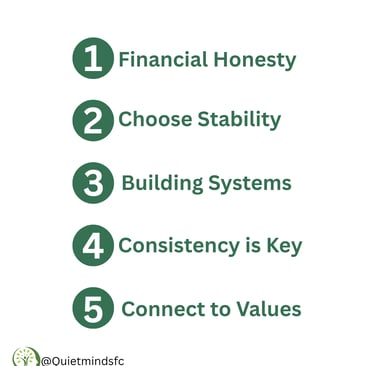
Here are five behaviors that matter more than any spreadsheet ever will.
1. Practice Financial Honesty (Even When It Hurts)
Before you start budgeting, before you start investing, before "fixing" anything, you first have to be honest. Be honest with your partners, especially yourself. You have to be honest about:
What you owe
What you spend
what you avoid looking at
what triggers your spending
Shame thrives in avoidance. However, peace begins with clarity. You don't need to judge yourself. Judgment has no place for moving forward. Instead, you need to tell yourself the truth. Numbers don't change, until your behavior changes around money. What changes your behavior? It would be honesty with yourself.
2. Choose Stability Over Impressing People
A lot of financial stress comes from trying to look okay. You know, that nice car, those nice clothes, eating out, constantly upgrading your life, just because you see others do it as well. What if I told you, stability is more powerful than status? Real wealth looks boring at times. Those emergency savings, bills being paid on time, driving the car that is already paid off, jus simply saying "no" to the lifestyle upgrades.
You don't need to look successful, you simply need to feel successful. That in return, makes you feel safe. Well, safety is underrated.
3. Build Systems for Your Worst Days
Most financial advice, assumes you're always disciplined. But what about when life throws those curveballs at you? Those:
depressive episodes
manic spending urges
stress spirals
emotional shutdowns
Your money plan should protect you, when you are not at your best. That means:
automating bills
automating savings (no matter how small)
removing stores cards from shopping apps, computers, cellphones, etc..
creating a 24-hour rule for non-essential purchases.
Don't just build a plan for your strongest day, also build them for your hardest ones as well.
4. Measure Progress by Consistency, Not Perfection
Missing a savings goal doesn't mean you failed. Overspending one week doesn't erase growth. Financial maturity isn't about never messing up. Instead, it's about coming back faster each time.
Consistency builds confidence. Confidence builds control, Control helps builds peace.
You don't need perfect months, you just simply need steady ones.
5. Connect Your Money to Your Values
What is life, if you don't have a purpose. It feels rather empty. Just as your money, without a purpose, it also feels empty. What it you asked yourself:
What kind of life am I trying to build?
What matters most to me?
Who am I protecting?
What future am I funding?
When money is tied to values, your spending becomes more intentional. Your savings become more meaningful. Sacrifices become easier.
Your money stops being about survival, it becomes an alignment. A tool, if you choose.
Behaviors First, Numbers Second
You can learn budgeting formulas in an hour. But learning:
discipline
patience
emotional awareness
self-forgiveness
delayed gratification
That's a lifelong practice. As well, if you struggled financially because of mental health, trauma, or instability. That doesn't make you irresponsible, it simply means you're human.
Your finances are not a reflection of your worth. They are a reflection of patterns. Just like anything, patterns can change. Just one behavior at a time.